CONFOR 2025: Why the UK Forestry Industry is Set for 'Accelerated Growth'
CONFOR UK Policy Conference Report 2025
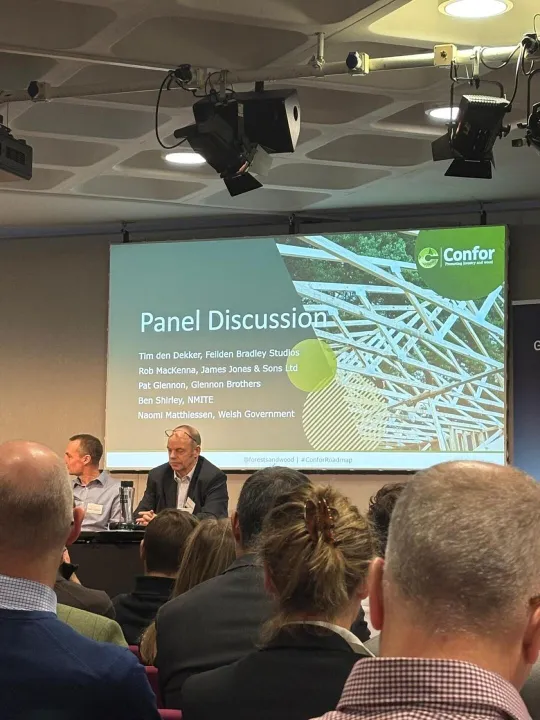
Tom attended the CONFOR UK Policy Conference in November, the theme of the day was Timber in Construction: From Roadmap to Reality.
To open the conference, Mary Creagh CBE MP, Under-Secretary of State, spoke powerfully stating:
"We have the roadmap, ambition, and partnerships. Now we must deliver."
She spoke about the government's dedication to the goals outlined in the Timber in Construction Roadmap. She also spoke strongly about how the housing industry can play a pivotal part in the economy and the vital role timber can play in building 1.5 million new homes sustainably and boosting economic growth by creating green jobs.
The sentiment in the room was much more positive than in the previous couple of years.
Here are Tom’s 4 key takeaways from the day:
Workforce & Skills
The forestry industry faces a major challenge in recruiting and retaining a skilled workforce to meet increasing operational programs and government tree-planting targets. Efforts are being made to attract new workers, including specific initiatives such as hosting events for military veterans to offer them insights into a potential career in the forestry and wood sector. Cultura Connect have signed the Armed Forces covenant and strongly supports the transition of military personnel joining the civilian workforce.
Carbon & Timber Value
The forestry industry must implement the Timber in Construction Roadmap and the National Wood Strategy for England. The industry needs to better measure and prove the carbon benefits of timber, leveraging it as a key material for achieving net-zero targets and addressing housing shortages.
Policy & Investment
The sector, which relies on long-term planning (forests take decades to grow), demands a stable, multi-decadal policy framework from the government to secure investor confidence. Policy instability has historically been a barrier to the flow of private capital keen to invest in the sector. To successfully increase productive planting rates, the government must guarantee the stability that will finally bring this crucial private funding off the sidelines
Public Engagement
The industry must proactively engage with the public, local communities, and politicians to counter misinformation to enable woodland creation at scale. This includes moving beyond statutory consultations, using accessible language, and highlighting the positive impacts of well-managed forests on local economies, biodiversity and the climate.
Tom’s round-up of the day:
The day was exceptionally positive, highlighting numerous encouraging initiatives. The prevailing sentiment among attendees, reinforced during networking sessions, suggested the industry is ready for a phase of accelerated growth after recent stagnation. Personally, the presentations were highly informative, contributing to a substantial learning experience.